PET STAIN & ODOR TREATMENT
Address the source—not just what you can see.
Targeted evaluation and treatment options for pet-related carpet, rug, and upholstery concerns.
A MORE THOUGHTFUL RESPONSE
Pet concerns can extend beneath the surface.
Visible staining may be only part of the issue. The appropriate response depends on the material, affected area, depth, age, and whether backing or padding may be involved.
We will evaluate the concern, explain suitable treatment options, and set realistic expectations before treatment begins.
An evaluation may consider
- Material and color stability
- Location and size of affected areas
- Visible staining and odor intensity
- Potential backing or padding involvement
- Previous products or treatments used
Severe or structural contamination may require additional services outside the scope of standard cleaning.
CLEAR EXPECTATIONS
A practical three-step approach
Locate
Review the visible and reported areas of concern.
Recommend
Discuss suitable treatment and likely limitations.
Treat
Complete the agreed service and follow practical aftercare guidance.
COMMON QUESTIONS
Honest answers about pet treatment.
Can every odor be completely removed?
Not every odor can be completely removed. Results depend on the material, depth, age, and extent of contamination. We will evaluate the affected area and explain the expected outcome before treatment begins.
Should I use a household spot product first?
Avoid adding more product before the area is evaluated when possible. Some products can affect color, leave residue, or complicate treatment.
Can upholstery and rugs be treated too?
Many carpet, rug, and upholstery concerns can be evaluated, subject to material suitability and condition.
MATCH THE TREATMENT TO THE DEPTH
Surface treatment is not always the complete answer.
A recent, isolated accident may affect a smaller area than repeated or older contamination. Urine and other liquids can spread beyond the visible spot and may reach carpet backing, padding, flooring, rug foundations, or upholstery filling.
We will evaluate the material and likely contamination path before recommending a response. Depending on the findings, the appropriate next step may range from targeted surface treatment to subsurface work or referral for pad, flooring, or structural correction.
Helpful details to share
- Material, room, and approximate affected area
- Recent accident or recurring concern
- Visible spots, odor intensity, and humidity changes
- Pet type and known accident locations
- Household products or prior professional treatments
Avoid applying additional products before the evaluation when possible. Residue, bleaching, fragrance, or color change can complicate inspection and treatment.
FOLLOW THE CONTAMINATION PATH
The visible spot may be smaller than the affected area.
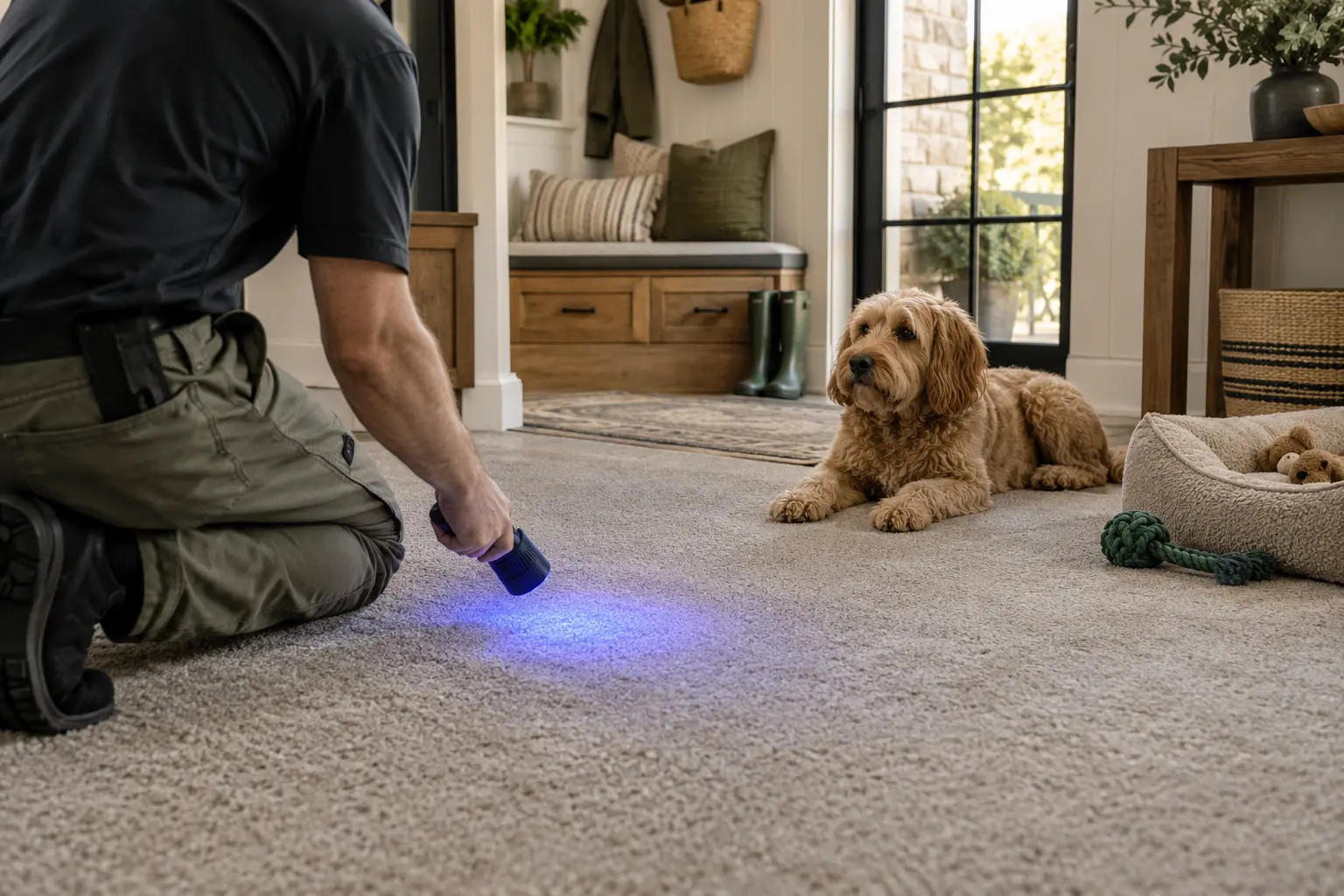
Liquid can move through carpet fibers into the backing, pad, tack strip, baseboard, or subfloor. Inspection helps estimate depth and spread before selecting a surface treatment, subsurface extraction, disengagement, pad replacement, sealing, or another corrective step.
- UV inspection may help locate some affected areas but is not conclusive by itself.
- Odor intensity can change with humidity and temperature.
- Prior household products can alter color or complicate treatment.
- Severe or structural contamination may exceed standard cleaning.
Results depend on material, age, depth, previous treatment, and access. Expectations should be established before work begins.
Read the spot and stain guide →A CLEANER HOME STARTS HERE
Request an evaluation for pet stains or odors.
Describe the affected material and area, including anything you know about previous treatments.