UPHOLSTERY CLEANING
Give the pieces you love a thoughtful refresh.
Material-aware upholstery cleaning for sofas, sectionals, chairs, and other upholstered furnishings.
COMFORT, BEAUTIFULLY MAINTAINED
Care that begins with the fabric.
Upholstery requires a more considered approach than one method for every piece. Fabric, construction, condition, and the care label should be reviewed before service is recommended.
Whether the goal is to refresh a family-room sectional or a favorite chair, suitability and expectations should be confirmed for the specific piece.
We will evaluate the piece and explain whether service is appropriate.
- Sofas and sectionals
- Dining and accent chairs
- Ottomans and upholstered benches
- Headboards and select specialty pieces
- Cushions and high-use seating areas
Cleaning suitability is confirmed after reviewing the fabric and manufacturer guidance.
A MATERIAL-AWARE APPROACH
Three steps to a more inviting room
Review
Identify the fabric, construction, use patterns, and areas of concern.
Recommend
Confirm suitable options and expectations before service begins.
Refresh
Complete the agreed service and provide practical aftercare guidance.
COMMON QUESTIONS
Good care starts with good information.
Can every upholstery fabric be cleaned?
Not every material should be cleaned the same way. We will evaluate the piece and explain whether cleaning is appropriate for its fabric and condition.
Can spills and body oils be treated?
Visible spots and high-use areas can be evaluated. Improvement varies by material, age, previous treatments, and the substance involved.
Should cushions be removed beforehand?
Leave the piece as it is unless we advise otherwise. We will discuss preparation when service is confirmed.
BEFORE WE CLEAN
Fabric, filling, and everyday use shape the plan.
Family-room seating can collect dry soil, crumbs, pet hair, body oils, spills, and residue from household products. These conditions do not respond identically, and visible wear or color loss cannot always be corrected through cleaning.
We will review the care label when available, inspect the fabric and construction, and use hidden testing when appropriate. The plan may also account for removable cushions, decorative trim, cushion filling, backing materials, prior treatments, ventilation, and drying conditions.
Helpful details to share
- Type and number of furniture pieces
- Manufacturer label or cleaning code, if visible
- Fabric, color, age, and overall condition
- Spills, odors, pet use, or previous products
- Loose cushions, skirts, trim, and access concerns
Clear photographs of the full piece, the care label, and areas of concern help us prepare for the first conversation.
FABRIC-SPECIFIC DECISIONS
The care label is a starting point, not the entire inspection.
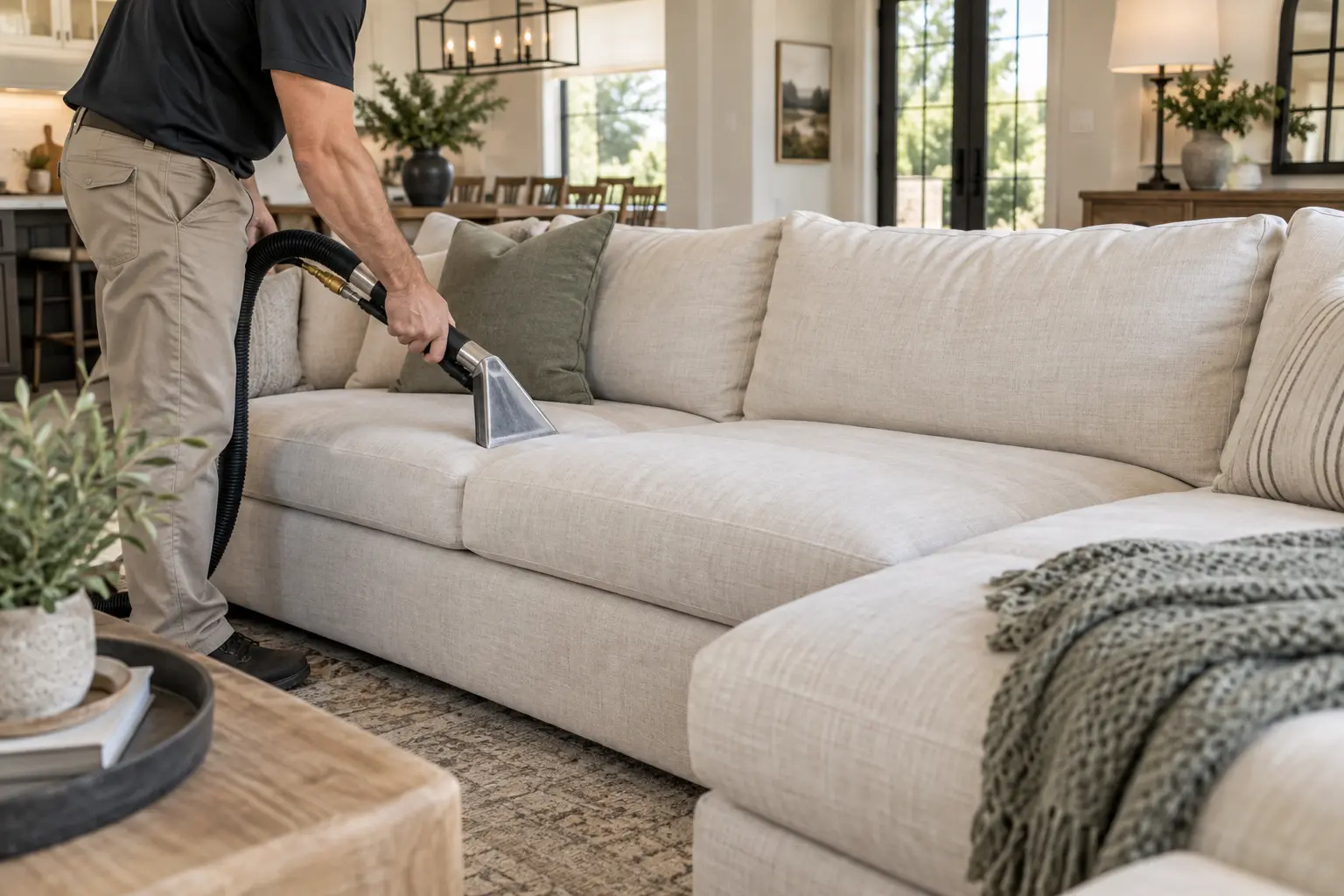
Upholstery evaluation considers fiber content, color stability, construction, cushion filling, backing, decorative trims, prior treatments, wear, and the source of spots. Hidden testing may be appropriate before applying moisture or chemistry to a visible area.
- Identify manufacturer cleaning guidance when available.
- Test for color movement, texture change, and shrinkage risk.
- Use controlled moisture and extraction appropriate for the piece.
- Explain spots or wear that may remain after cleaning.
Delicate, unstable, antique, embellished, or specialty fabrics may require referral to a dedicated textile-care specialist.
A CLEANER HOME STARTS HERE
Tell us about the furnishings you want refreshed.
Share the piece, material, condition, and concerns, and we will recommend the appropriate cleaning approach.